
Precision engineered, built in-house, shipped worldwide
Every component laser-cut, bent and welded on our floor in Dongguan, and finished under the same inspection.
Selected Works
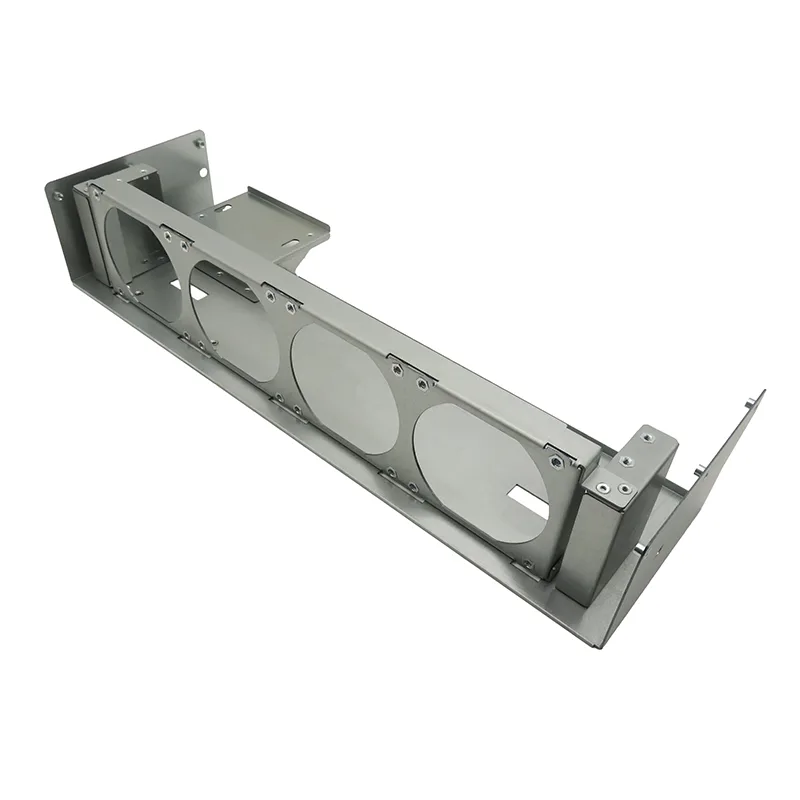
LED Light Fixture Mounting Bracket
Heavy-duty galvanized bracket for LED lighting fixture and distribution frame mounting. Large oval cable pass-throughs accommodate thick wiring bundles.
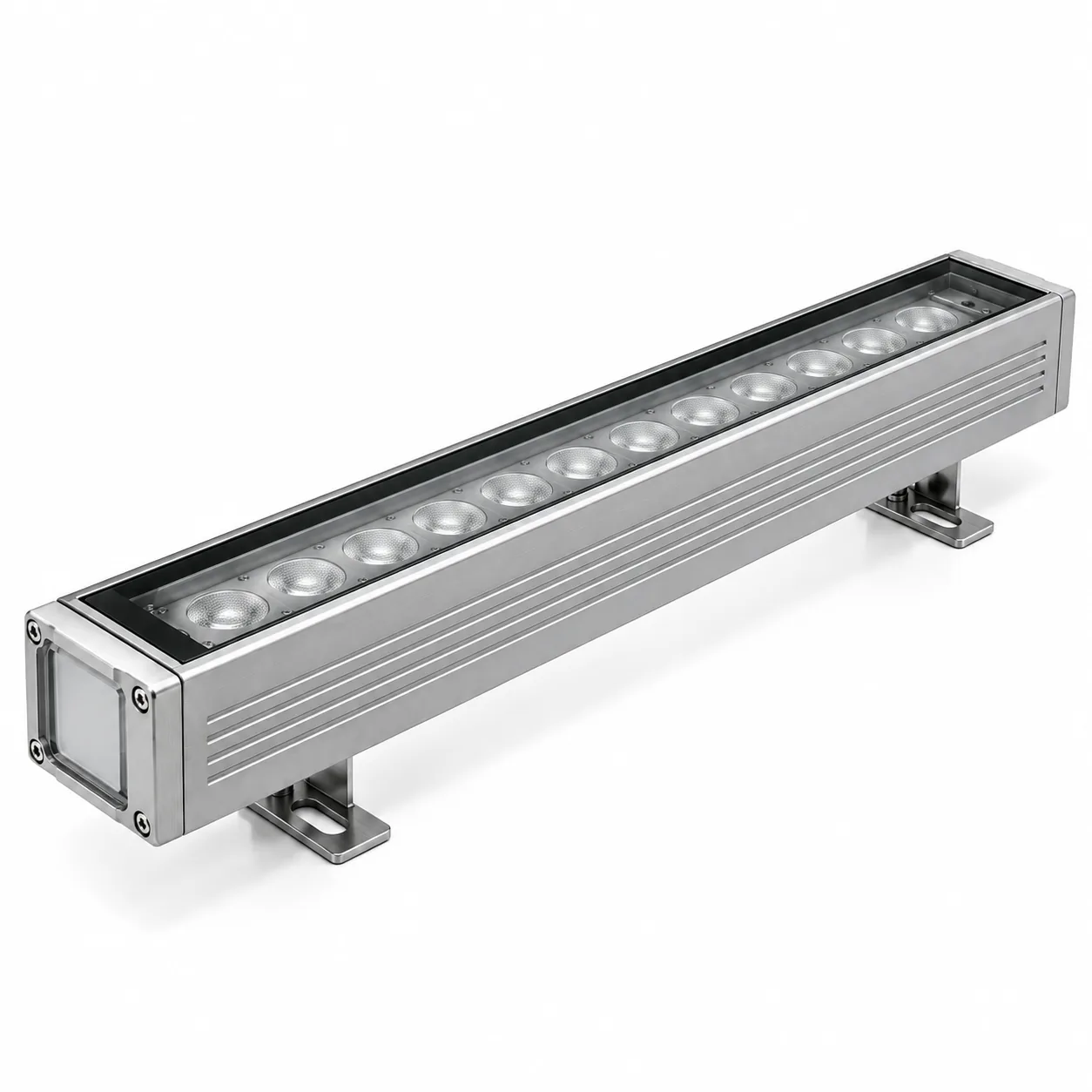
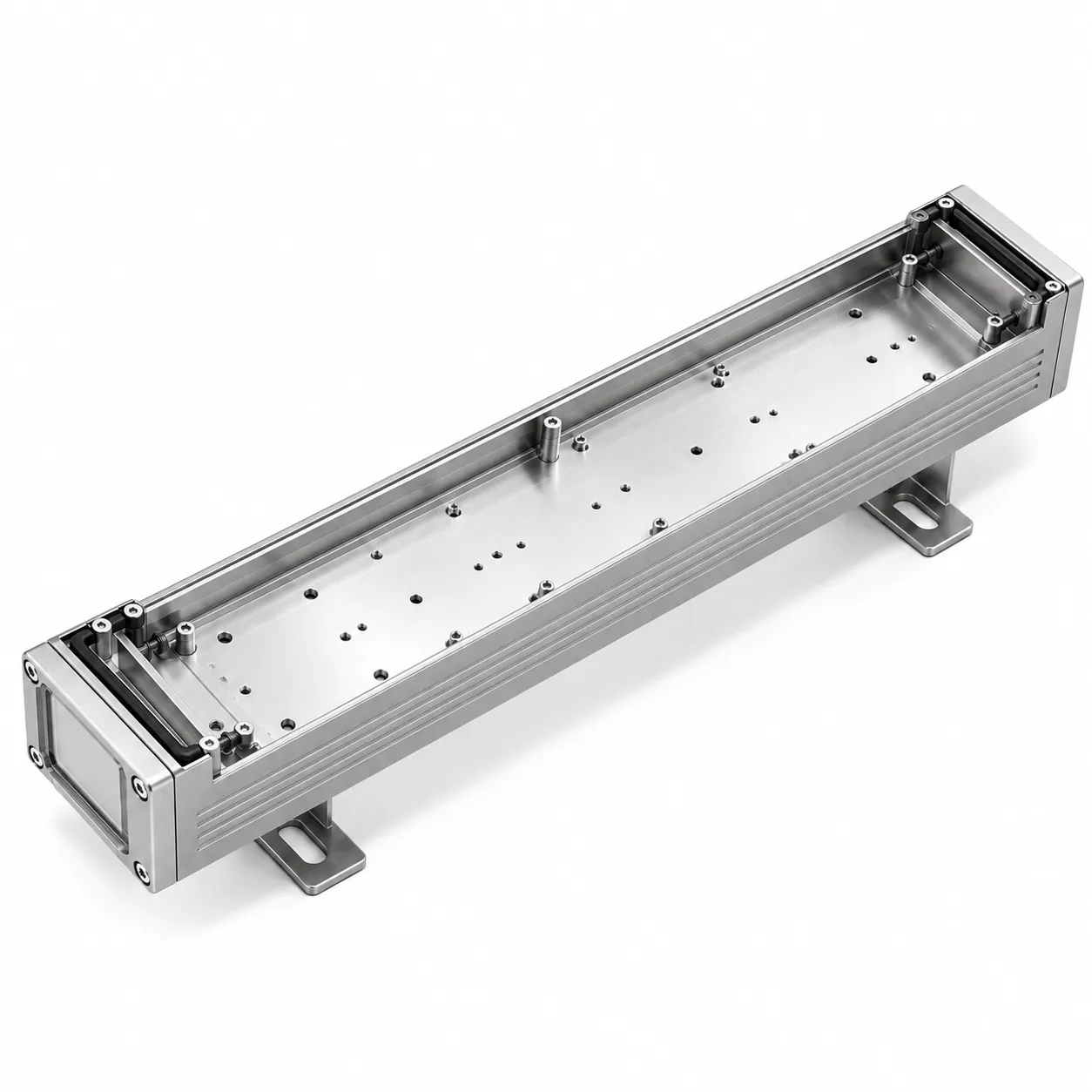
LED Luminaire Housing
Outdoor LED luminaire housing in 5052 aluminium, roughly 600 × 120 × 60 mm. The LED board mounts directly to a flat masked face so the heat path starts in metal, and the exterior carries an embossed rib pattern that adds area and stiffness without tall fins.
LED Street Light Housing — Die-Cast & Sheet Metal
Roadway luminaire housing for LED street lights, built to hold a 100–300 W module with the driver in an isolated compartment. Aluminium or galvanised steel, IP66 gasket channel, adjustable tilt bracket and a tool-free opening for maintenance crews working at height.
LED Panel Light Frame — Slim Backlight Housing
Slim frame that turns an LED panel light into a recessed, surface-mounted or suspended fixture. 595×595 and 595×1195 sizes, mitred corners with internal corner brackets, 9–20 mm profile depth and an optional driver tray so installers never open the ceiling twice.
LED Floodlight Housing — 50–400 W Outdoor
Outdoor floodlight enclosure for 50–400 W LED modules, with a cast or formed body, hinged glass bezel and a separate driver chamber that keeps heat away from the electronics. Bracket-mounted with a ±90° aiming range for facade, area and sports lighting.
LED Tunnel Light Enclosure — Vibration Resistant
Tunnel and underpass luminaire enclosure engineered for constant vibration and washdown. Sealed driver bay, anti-loosening fastener scheme, IK08 impact front and a 100–200 W thermal path sized so the housing runs cooler than the LED package allows.
All LED Lighting sheet metal parts
- LED Light Fixture Mounting Bracket
- LED Luminaire Housing
- LED Street Light Housing — Die-Cast & Sheet Metal
- LED Panel Light Frame — Slim Backlight Housing
- LED Floodlight Housing — 50–400 W Outdoor
- LED Tunnel Light Enclosure — Vibration Resistant
- LED High Bay Light Housing — Industrial Ceiling
- LED Heat Sink Assembly — Extruded & Stamped
- LED Driver / Power Supply Enclosure — IP67
- LED Module & Strip Housing — Linear Profiles
Specifications we produce
- Material
- SGCC galvanized steel 2.0mm · AL5052-H32 aluminum 2.0mm · AL ADC12 die-cast + AL5052 1.5mm sheet · AL6063-T5 extrusion 0.8mm · AL ADC12 die-cast + AL5052 2.0mm · AL5052-H32 2.0mm + SUS304 mounting brackets · AL ADC12 die-cast + AL5052 1.5mm · AL6063-T5 extrusion / AL1050 1.0mm stamped fins · AL6063 1.0mm extrusion · AL6063-T5 extrusion 0.5-0.8mm
- Tolerance
- ±0.1mm · ±0.2mm, flatness called out on the board mounting face
- Manufacturing processes
- Laser Cutting · CNC Bending · Embossing · Anodizing · die casting · CNC machining · stamping · extrusion profiling · anodizing · laser cutting · CNC bending · TIG welding · extrusion + stamping · fin stacking · end cap stamping · cutting
- Surface Finish
- Hot-dip galvanized · Clear anodised, board mounting face masked bare · outdoor powder coat IP66 · anodizing Type II · outdoor powder coat IP65 · outdoor powder coat + anti-corrosion · powder coat + reflective interior · anodizing or powder coat
LED lighting sheet metal: heat out, light where you want it
An LED luminaire is a thermal device with an optical requirement. The housing has to move heat away from the diodes, hold reflectors and diffusers in exact relative positions, and survive outdoors for years — all while staying within a weight and cost budget that is set by a very competitive market.
Because the light itself is unforgiving, small geometric choices become visible: a gap shadow at a joint, a ripple on a painted reflector, a fastener head inside the beam path. These are the details we ask about before production.
- Typical LED lighting parts we manufacture
- Street light and flood light housings
- Panel light frames and diffuser retainers
- High-bay reflector housings
- Heat sinks and thermal spreader plates
- Driver compartments and gear trays
- Thermal spreading needs metal, not paint thickness
- Heat paths want bare or thin-coated metal contact. Where a heat sink mates to the housing, we keep the contact area masked from powder and control the flatness of the mating face, because an air gap is a thermal resistance.
- Reflector surfaces are optical surfaces
- A formed reflector with ripples will show as banding in the beam. Those surfaces need a smoother substrate, a gentler forming process or a separate reflector material — an early conversation rather than a rework loop.
- Sealing against water ingress on outdoor luminaires
- As with telecom enclosures, ingress performance depends on gasket compression and panel flatness. Outdoor luminaires also see thermal cycling every day, so gasket retention and screw spacing are designed for movement, not just for the day of assembly.
- Material and finish choices for LED housings
- Aluminium 5052 and 6061 for heat sinks and housings where conduction matters; SGCC and SPCC for gear trays and mounting hardware; 304 stainless fasteners and brackets in coastal installations. Anodising on heat-dissipating surfaces, polyester powder coat in RAL colours on visible faces, and high-reflectance white coating inside reflector cavities.
- Quality records LED buyers ask for
- Dimensional reports on optical interfaces, coating thickness and colour, flatness records on thermal mating faces, and salt-spray expectations for outdoor housings. Batch traceability supports warranty administration, which in lighting runs for years.
What we make, not just who for
Enclosures, cabinets, chassis, brackets, panels and frames — with the design constraints each one comes with.
Sheet metal engineering guides
 Zinc Plating vs Nickel PlatingZinc protects steel even when scratched, for cents. Nickel is harder and brighter but 3-5x the cost. The finish decision, in one table.Read More
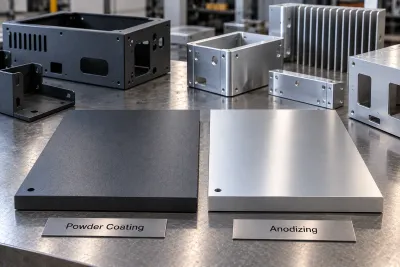 Powder Coating vs Anodizing: How to ChoosePowder wins on colour and substrate range; anodizing wins on wear and thinness. Five rules that decide it, with the cost drivers behind each.Read More
Have a custom part in mind?
Upload your product files or describe your specs — our engineers will return a quote with material, process, and cost details within 24 hours.