
Precision engineered, built in-house, shipped worldwide
Every component laser-cut, bent and welded on our floor in Dongguan, and finished under the same inspection.
Selected Works
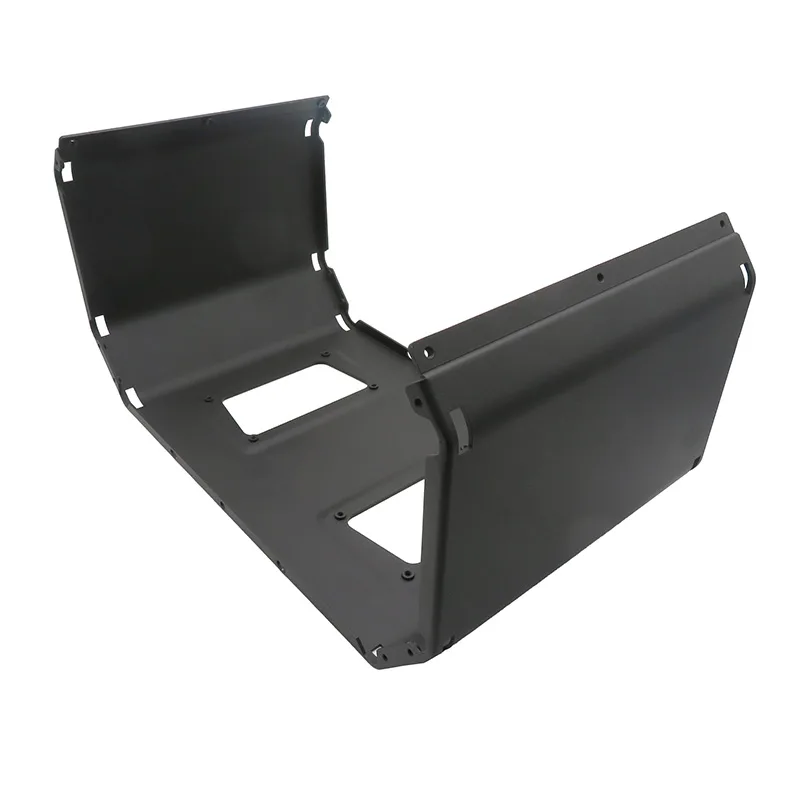
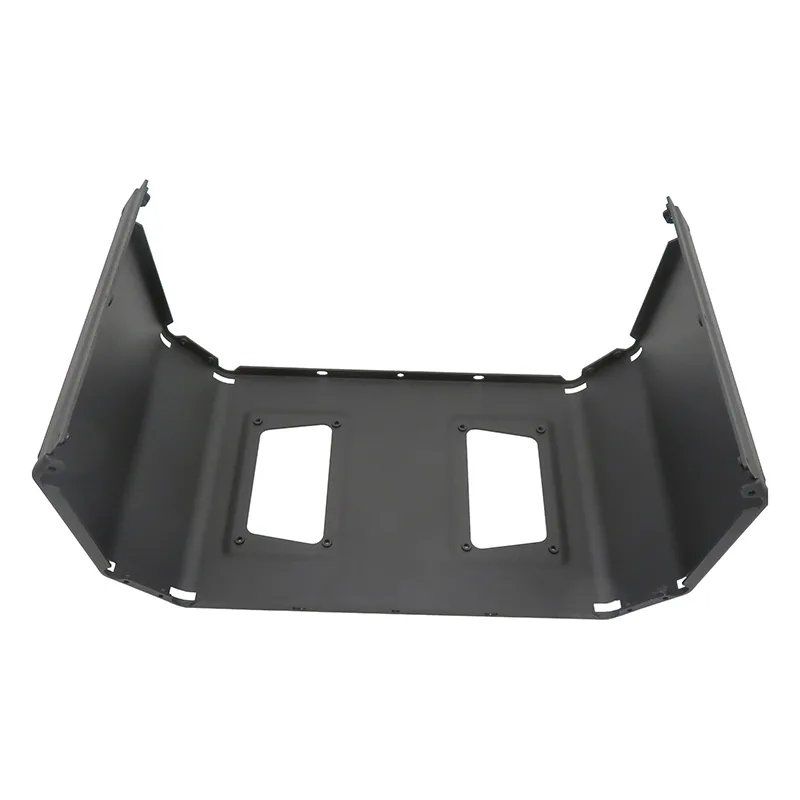
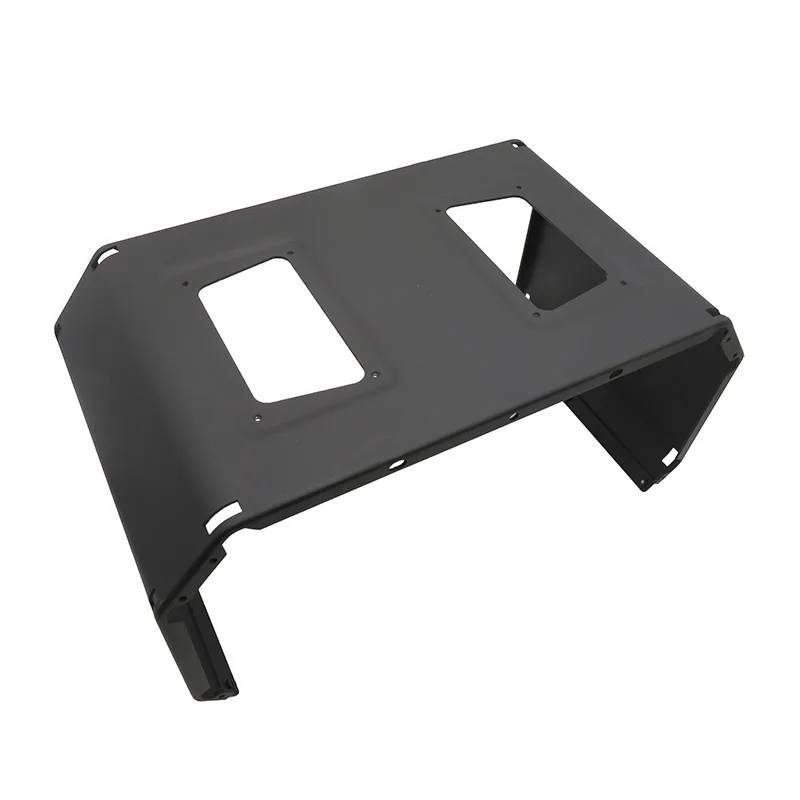
Solar Panel Mounting Bracket
U-channel bracket with rectangular window cutout for solar panel and inverter mounting. Simple two-bend design for fast production.
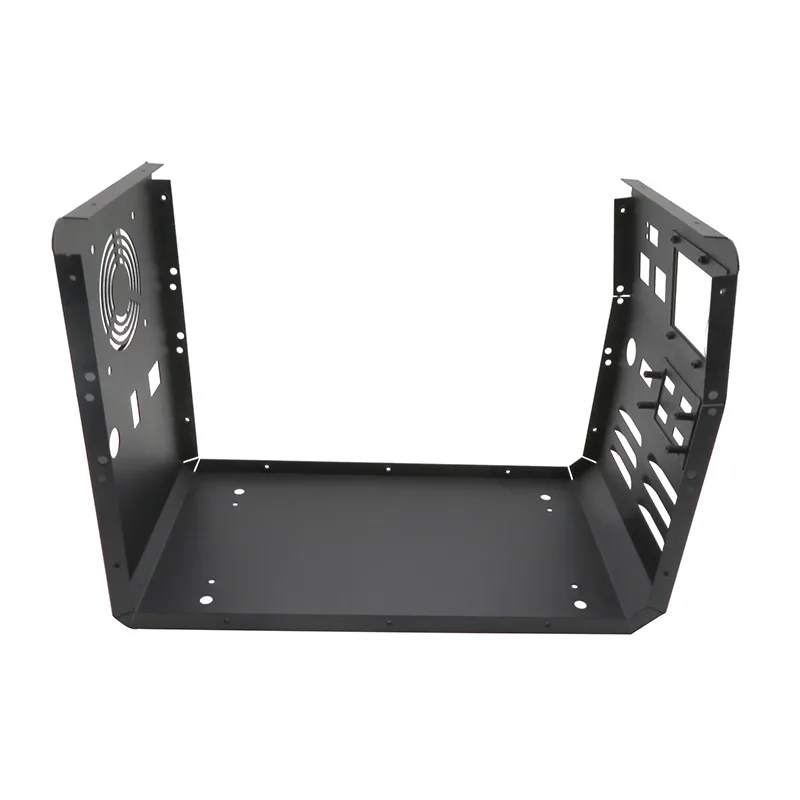
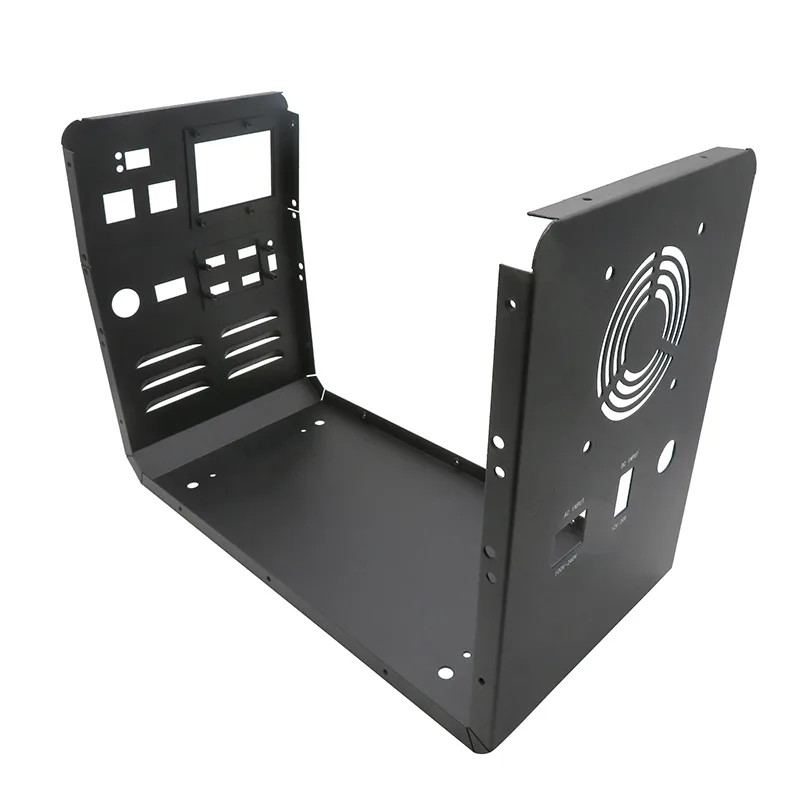
Portable Power Station Enclosure
Open U-shaped aluminum enclosure for portable power station assembly. Fan cutout on one side panel with circular vent pattern for thermal management.
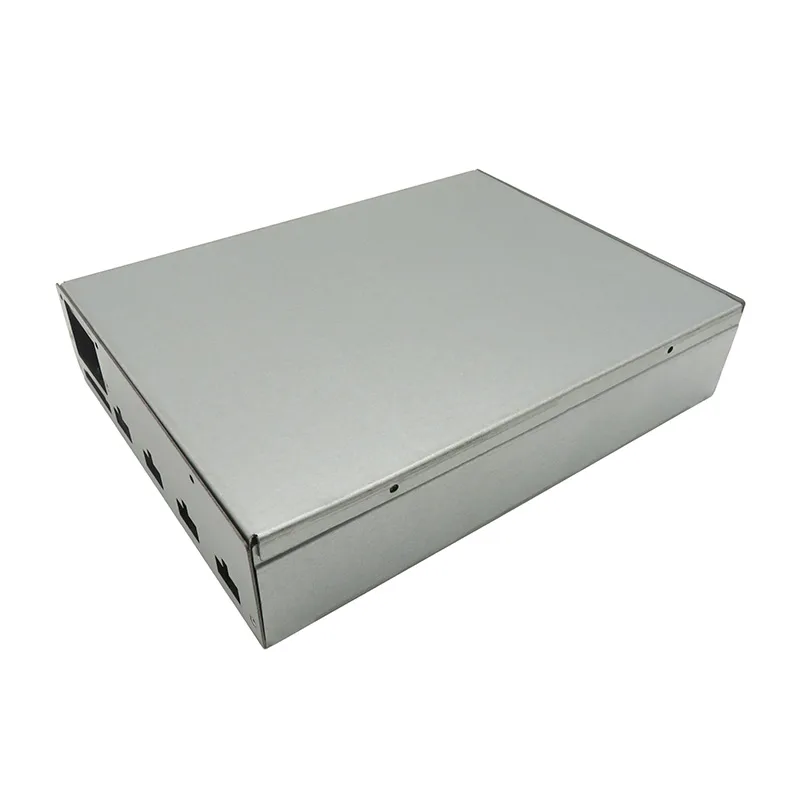
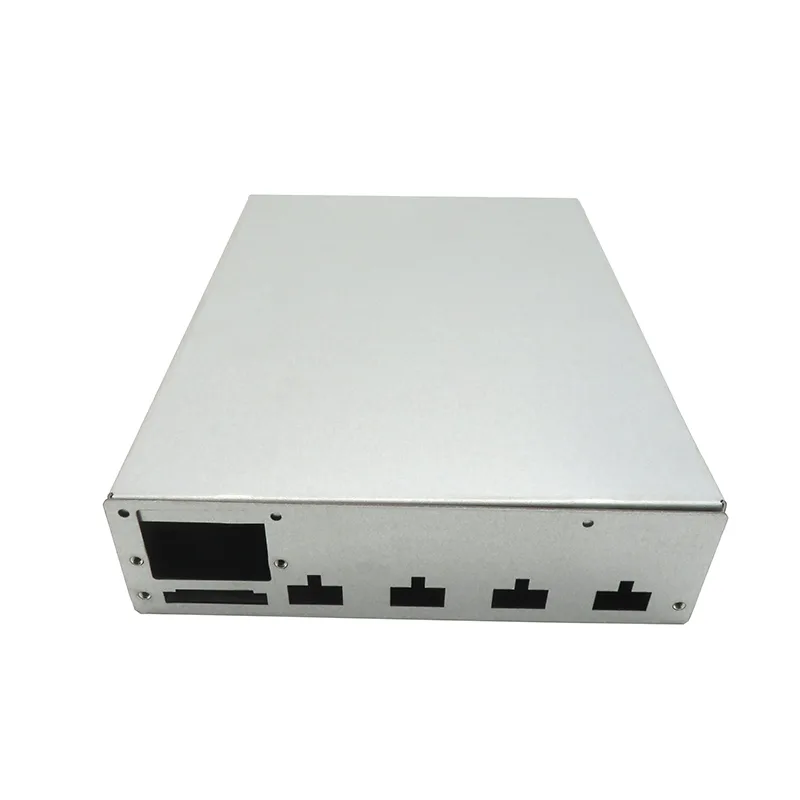
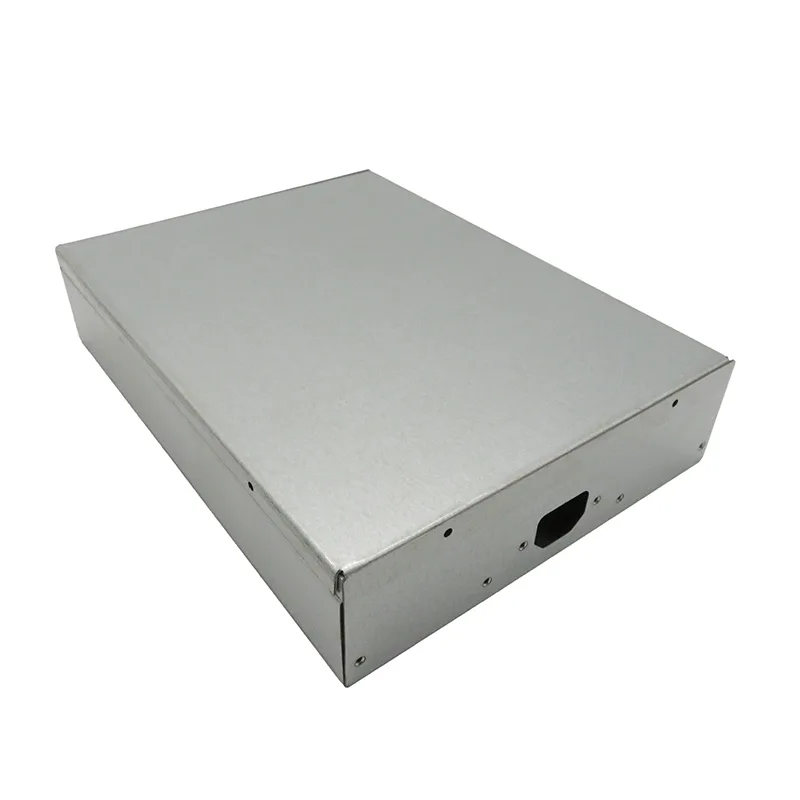
Solar Inverter Enclosure
Flat-profile inverter enclosure with sealed gasket channel and cable entry provisions. Precision-folded edges ensure IP-rated weather sealing.
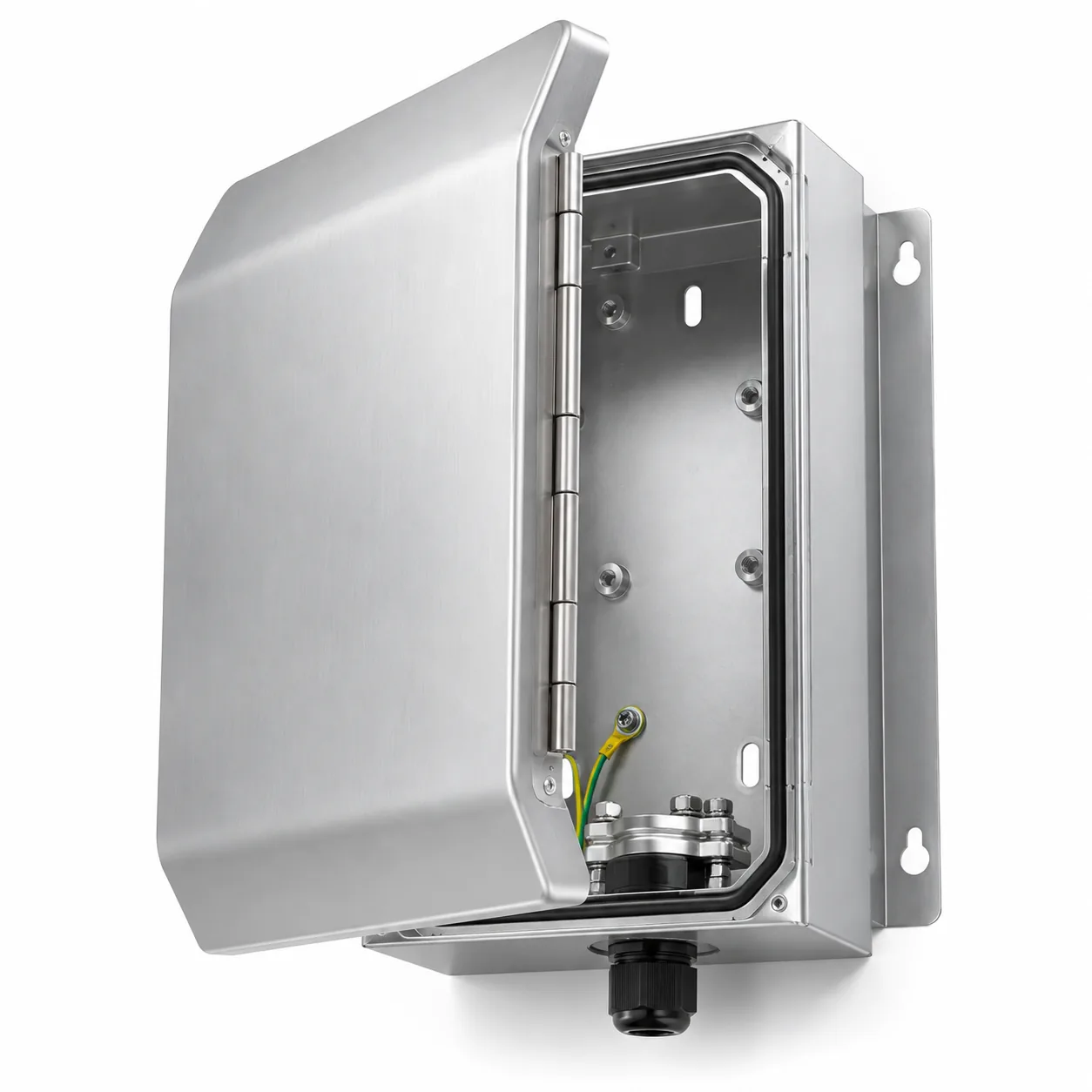
EV Charger Enclosure
Wall-mounted AC charger housing in 5052 aluminium, folded with no welding in the enclosure itself. The hinged cover carries a formed gasket groove on a continuous path, and the cable entry sits on the bottom face with a strain-relief bracket so the gland seals against bare metal.
Energy Storage Cabinet (BESS)
Outdoor-rated IP54/IP55 cabinet for battery energy storage systems (BESS) from residential to utility-scale installations. Features thermal management vents, battery rack mounting plates, fire suppression integration points, and cable management systems for high-voltage DC connections.
Outdoor Solar Inverter Enclosure
Sheet metal housing for string inverters and hybrid inverters used in solar PV systems. Engineered for outdoor installation with IP65 protection, integrated heat sink channels, and optimized ventilation for power electronics thermal management. Wall-mount and pole-mount configurations available.
All New Energy sheet metal parts
- Solar Panel Mounting Bracket
- Portable Power Station Enclosure
- Solar Inverter Enclosure
- EV Charger Enclosure
- Energy Storage Cabinet (BESS)
- Outdoor Solar Inverter Enclosure
- EV Charging Station Enclosure
- Solar Mounting Bracket/Rail
- PV Combiner Box Enclosure
- Wind Turbine Control Cabinet
- Distribution Cabinet for New Energy
- Charging Pile Internal Brackets
Specifications we produce
- Material
- SPCC steel 2.0mm · AL5052-H32 aluminum 2.0mm · AL5052-H32 aluminum 1.5mm · SGCC galvanized steel 2.0mm · AL6063-T5 aluminum extrusion · SUS304 stainless steel 2.0mm · SGCC galvanized steel 2.5mm · SPCC 1.5mm / AL5052 1.5mm
- Tolerance
- ±0.1mm · ±0.2mm · ± 0.1 mm · ± 0.10 mm · ± 0.08 mm
- Manufacturing processes
- Laser Cutting · CNC Bending · Precision Laser Cutting · Anodizing · TIG Welding · Powder Coating · MIG Welding · Spot Welding · Extrusion Profiling · CNC Machining · Cutting · IP-rated Sealing · Stamping
- Surface Finish
- Powder coat black · Anodizing Type II, black · Powder coat silver · Powder coat outside, earth stud and gasket lands masked · Outdoor powder coat, IP54/IP55 rated · Outdoor powder coat, IP65 rated · UV-resistant powder coat, IP65 rated · Anodizing Type II, 15µm · Powder coat, IP65 rated · Passivation + outdoor powder coat · Outdoor powder coat, IP55 rated · Zinc plating or powder coat
New energy hardware: volume, thermal loads and transit abuse
Solar inverters, EV chargers and battery-storage cabinets combine three pressures that rarely appear together: outdoor exposure, high electrical loads in a sealed box, and production volumes that climb fast once a programme is awarded. Sheet metal for this industry has to be designed for a cost curve, not just for a prototype.
The parts that fail in this sector almost always fail in transit or in thermal cycling rather than in static use. A tray that is stiff enough on a bench can deflect under a 45 kg module on a pallet; a housing that is sealed at room temperature can breathe at −20 °C and pull moisture inside. Design reviews for new energy parts therefore look at load cases and temperature ranges first.
- Typical new energy parts we manufacture
- Solar inverter housings with heat-sink integration
- EV charger enclosures and wall-mount back plates
- Battery module trays and busbar covers
- Energy-storage cabinet frames and doors
- Heatsink brackets and thermal baffles
- Gauge reduction is a design exercise, not a purchasing one
- Moving a tray from 2.0 mm to 1.5 mm saves cost and weight, but only if the load path is redesigned with it. A formed rib in the right place does more than an extra half millimetre of steel. We run that study with the customer’s load case before quoting, because it changes the die and the price together.
- Sealed housings and condensation paths
- A fully welded, gasketed housing without a drain or breather will accumulate condensation over a season. We ask how the customer plans to manage moisture, because a small breather or a correctly placed drain hole is a drawing change at design time and a warranty claim later.
- Coating choice on aluminium heat paths
- Anodising is often specified for heatsink brackets because it is thin and thermally predictable; powder coat on the same face would insulate the joint. Where a housing is partly painted and partly anodised, we sequence the operations so the anodised faces are masked during powder cure.
- Material and finish choices for new energy hardware
- SGCC galvanised steel for structural housings, 5052 aluminium where heat spreading or weight matters, and 304 stainless for coastal installs or areas exposed to de-icing salt. Powder coat RAL-matched to the customer’s brand is common on visible faces; anodising on thermal and sliding interfaces. Glass-fibre-reinforced plastic housings are sometimes substituted by customers, but metal remains the choice where earthing, impact resistance and flame behaviour are specified.
- Quality records new energy buyers ask for
- This sector borrows from automotive thinking: first-article inspection, dimensional reports against the datum, coating thickness, and transit testing to ISTA or the customer’s own standard. For battery-related parts we also see material traceability and flammability expectations pushed down to the sheet metal level, which we document per batch.
What we make, not just who for
Enclosures, cabinets, chassis, brackets, panels and frames — with the design constraints each one comes with.
Sheet metal engineering guides
 Powder Coating vs Anodizing: How to ChoosePowder wins on colour and substrate range; anodizing wins on wear and thinness. Five rules that decide it, with the cost drivers behind each.Read More
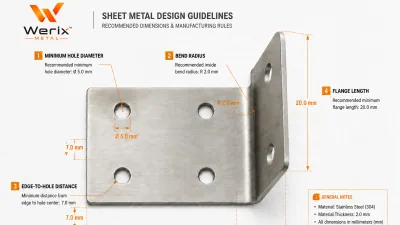 DFM for Sheet Metal: Essential Design Rules That Save Cost and Prevent Production FailuresDesign-for-manufacturing rules for sheet metal — minimum hole sizes, bend radii, edge distances, tab-and-slot design, and common mistakes that cause scrap.Read More
Have a custom part in mind?
Upload your product files or describe your specs — our engineers will return a quote with material, process, and cost details within 24 hours.