
Laser Engraving (Marking)
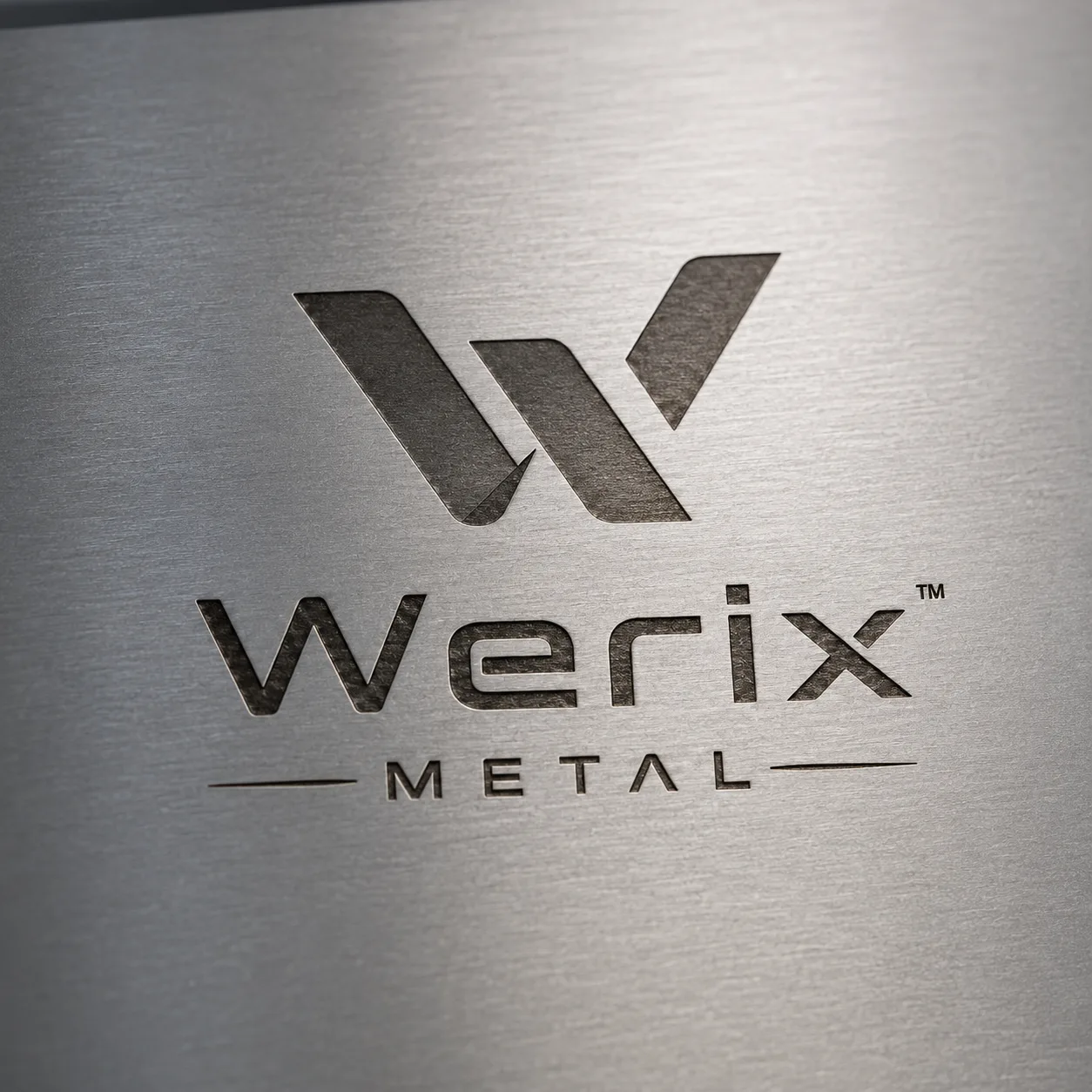
High-precision fiber laser creates permanent marks on metal surfaces. Used for part numbers, logos, QR codes, and traceability.
Key Parameters
Recommended Base Materials
Part number marking, brand logos, QR code traceability, safety labels
Pairs with these materials
What to specify on your drawing
- Artwork as a vector file (DXF/AI) with the marking area dimensioned to the part, not just to the artwork
- Marking depth intent: surface anneal for contrast marking, or through-coating/engrave for depth — they are different setups
- Whether the mark carries traceability data (serialisation, QR/data-matrix) that must be verified per part
- Position and orientation referenced to an existing feature, so the mark lands correctly after bending
Factory Work Sequence
CAD file import and parameter setting (power, speed, frequency)
Fiber laser beam focusing at 1064nm wavelength on metal surface
Mark verification under magnification for legibility and depth compliance
Advantages
- Permanent, high-contrast marks that resist wear and corrosion
- No consumables, no chemicals — clean and environmentally friendly process
- Capable of micro-marking at 0.1mm resolution for QR codes and serial numbers
Limitations
- Slower than pad printing or silk screening for simple logos
- Mark contrast varies significantly between material types and surface finishes
Apply this finish?
Upload STEP files to our automated Estimator for custom thickness allowances and lead time quotes.
Also in this category
Laser engraving marks the surface by removing or altering a shallow layer of material, typically 0.01–0.2 mm deep, leaving a permanent, high-contrast legend with no consumables. It is the standard way to apply part numbers, ratings, CE-style data plates and traceability marks that must survive the product life.
Engraving is permanent; printing and labelling are not
A silk-screened legend wears at the edges that get touched, and a label can be removed. An engraving is part of the part. That is why nameplates, ratings plates and traceability marks are engraved rather than printed, particularly on equipment that will be cleaned or handled repeatedly.
Contrast depends on substrate and coating, not on the laser
On anodised aluminium, the laser removes the dye layer to expose the pale substrate, producing strong contrast without additives. On bare stainless, an engraved mark is a texture change rather than a colour change and reads best under raking light. On powder-coated steel, the laser removes the coating and exposes the substrate, which is high contrast but removes the coating protection at that spot. Specify the effect, not just the process.
Where engraving interferes with the finished part
Engraving a coated or plated surface breaches the protective layer for the depth engraved. On a corrosion-critical part that small breach is where corrosion starts, which is why an engraved legend on an outdoor coated cabinet belongs on a masked or separately finished area. On a part that will be coated after marking, the engraving is filled by the film and becomes unreadable.
Depth, legibility and the smallest character
Engraving depth is limited, and a very deep mark needs multiple passes, which increases cost and heat input. Legibility is governed by the smallest character the process can hold cleanly and by the contrast between the mark and the surrounding surface. A drawing that states a font size without stating a depth has specified half the requirement.
Mark type against substrate
| Substrate | Mark | Contrast |
|---|---|---|
| Anodised aluminium | Dye layer removed | High — pale mark on coloured surface |
| Bare stainless | Texture change | Moderate — reads under raking light |
| Powder-coated steel | Coating removed | High, but breaches the coating at that point |
| Bare steel | Surface displacement | Low until a colour fill or coating is applied |
| Plated steel | Deposit removed | Moderate; exposes the substrate at the mark |
Specifications this finish is worked to
These are specifications the finish is specified against. They are not certifications held by WERIX — ISO 9001 is the only management-system certification we hold.
What to put on your drawing
- The exact text, character height and font, or the artwork file.
- Engraving depth, or a depth range, rather than "engraved".
- Mark position from a datum, not from a sheared edge.
- Whether the mark is applied before or after finishing — the order changes legibility.
- Whether a colour fill is required for contrast on a bare-metal substrate.
Frequently asked
How deep is a laser engraving?
Typically 0.01–0.2 mm depending on the substrate and the required contrast. Deeper marks need multiple passes, which costs more and puts more heat into the part. State the depth you need rather than only the text.
Will an engraving survive powder coating?
It will be filled by the film if it is applied before coating, and it will breach the coating if applied after. Neither is automatically wrong — but the order has to be a decision, because a mark buried under 100 µm of powder is not a legible mark.
Can you engrave a coloured legend?
On anodised aluminium the dye removal gives a natural contrast with no additive. On bare or plated metal, contrast usually comes from a colour fill applied after engraving, which is a separate operation and worth specifying deliberately.
Is engraving better than a printed label for a nameplate?
For anything that will be cleaned, abraded or handled over a long service life, yes — the mark is part of the metal rather than an applied film. A label is cheaper and can carry multi-colour artwork, so it fits applications where neither durability nor tamper resistance is critical.
Related reading
Finish guides
Read the Laser engraving guide
The specs, standards and drawing notes above give the numbers. The guide gives the reasoning behind them — how the finish behaves on the shop floor, where it fits, and where it does not.