
Precision engineered, built in-house, shipped worldwide
Every component laser-cut, bent and welded on our floor in Dongguan, and finished under the same inspection.
Selected Works
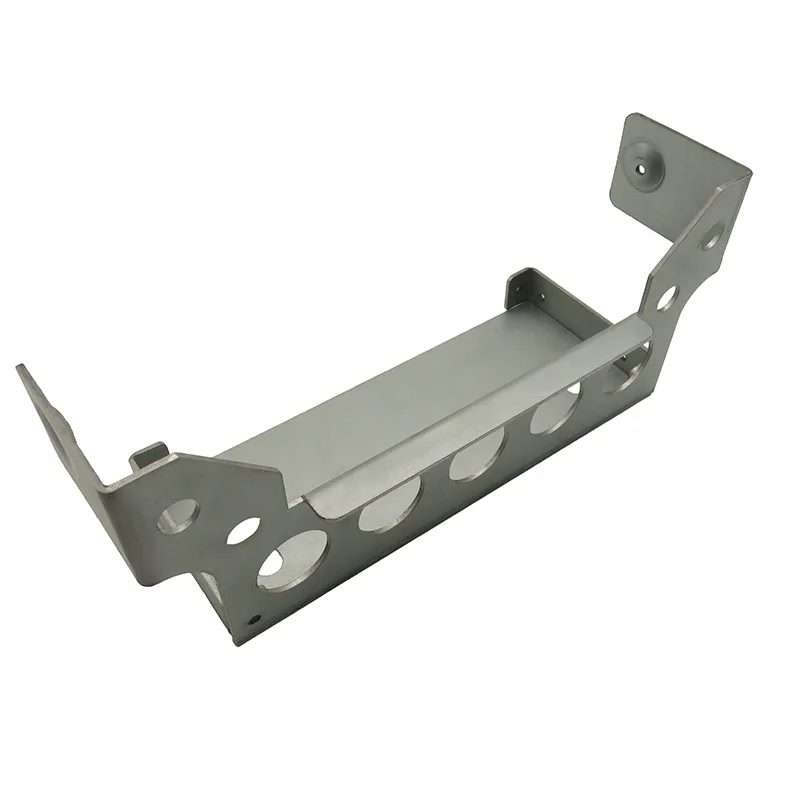
Vehicle Sensor Mounting Bracket
Precision aluminum bracket for automotive sensor and equipment mounting. Multiple circular cutouts reduce weight while maintaining structural integrity.
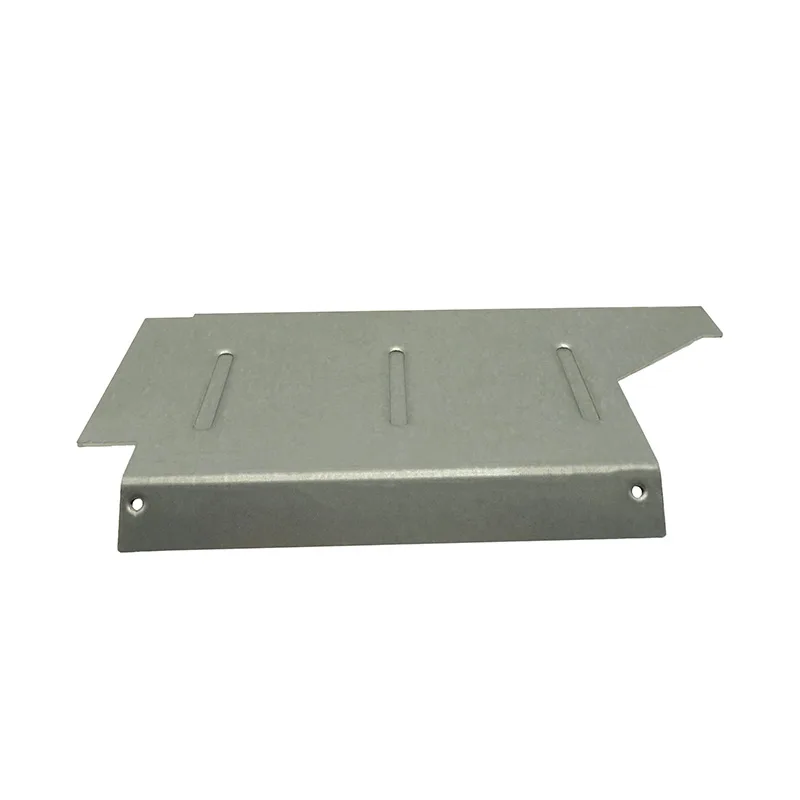
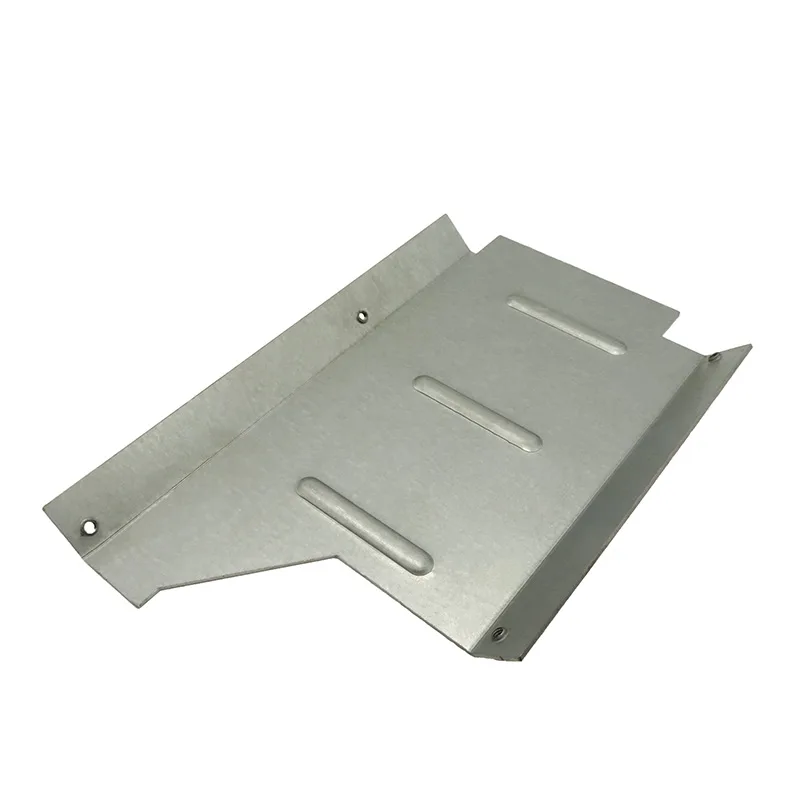
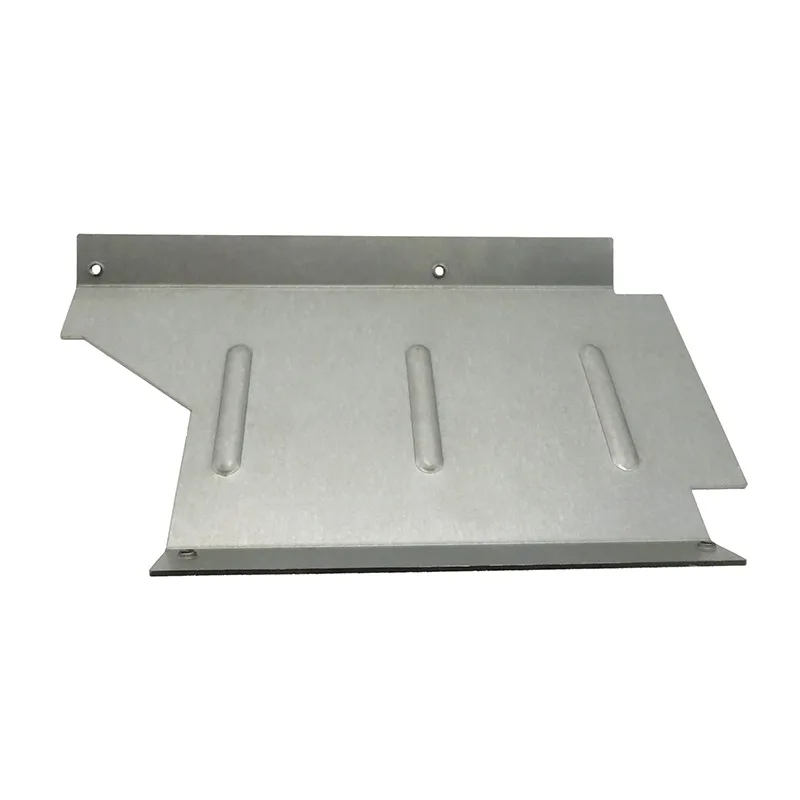
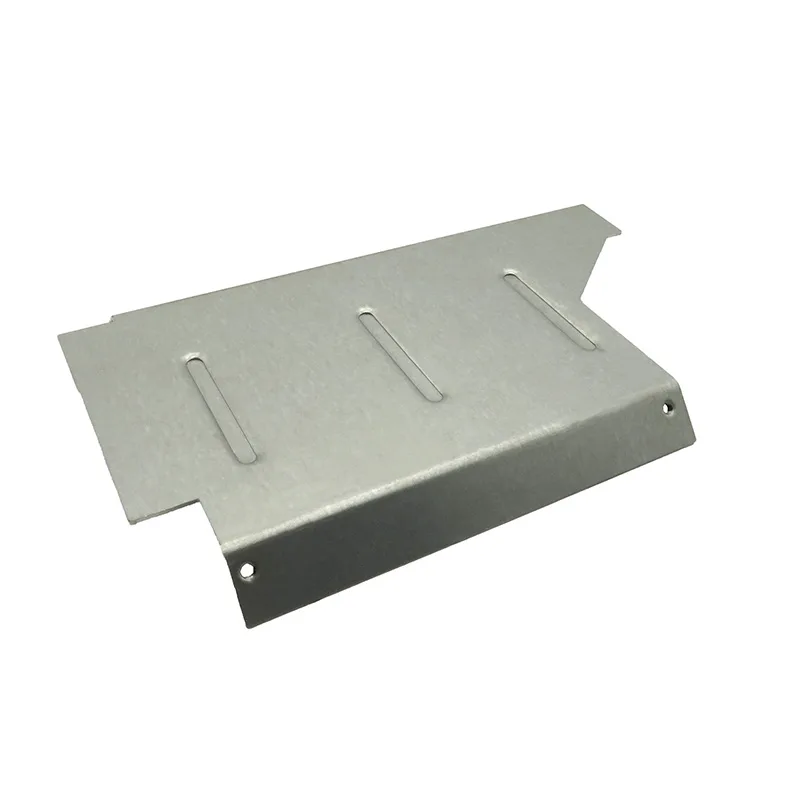
Automotive Mounting Bracket
Flat galvanized bracket with embossed stiffening ribs for structural reinforcement. Multiple mounting holes for flexible installation.
EV Battery Tray / Enclosure
Lightweight aluminum tray housing the EV battery pack with integrated cooling channel passages and crash-resistant structural design. Stamped and welded from AL6061-T6 for the optimal strength-to-weight ratio required by automotive OEMs. Every EV requires one battery tray — this is the single highest-growth sheet metal product in the automotive sector.
EV Battery Pack Bottom Shield
Stamped aluminum underbody protection plate shielding the battery pack from road debris impact. Engineered with controlled deformation zones to absorb impact energy while maintaining battery cell integrity. Mandatory safety component for all EV platforms.
Motor Controller Housing
Precision aluminum enclosure for EV drive motor inverters and controllers with internal cooling fins, EMI shielding provisions, and high-voltage connector mounting interfaces. Must meet automotive vibration and thermal cycling standards.
Automotive Body Stamped Parts
Structural and exterior body stampings including door inners, hood panels, and fender reinforcements. Deep-drawn from automotive-grade mild steel with Class A surface quality for visible panels.
All Automotive / EV sheet metal parts
- Vehicle Sensor Mounting Bracket
- Automotive Mounting Bracket
- EV Battery Tray / Enclosure
- EV Battery Pack Bottom Shield
- Motor Controller Housing
- Automotive Body Stamped Parts
- Automotive Brackets & Mounts
- EV PDU/BDU Enclosure
- Car Roof Rail / Luggage Rack
- Automotive Seat Frame/Bracket
- Exhaust Heat Shield
- Car Navigation Housing/Bracket
Specifications we produce
- Material
- AL5052-H32 aluminum 2.0mm · SGCC galvanized steel 2.0mm · AL6061-T6 aluminum 2.0–3.0mm · AL5052-H32 aluminum 1.5mm · AL6061-T6 aluminum 3.0mm · DC04/DC06 deep-draw steel 0.7–1.2mm · SPCC/SPHC steel 1.5–3.0mm · AL6063-T5 aluminum extrusion · SPHC hot-rolled steel 2.0–3.0mm · AL1050 aluminum 0.5mm / SUS430 stainless 0.4mm · AL5052-H32 aluminum 1.0mm
- Tolerance
- ±0.1mm · ± 0.1 mm · ± 0.10 mm · ± 0.03 mm
- Manufacturing processes
- Laser Cutting · CNC Bending · Anodizing · Friction Stir Welding · Hydroforming · Stamping · Die Casting · CNC Machining · TIG Welding · Progressive Die Stamping · Draw Forming · Hydraulic Forming · Precision Laser Cutting · IP-rated Sealing · Extrusion Profiling · Robotic MIG Welding · Embossing · Trimming · Precision Stamping
- Surface Finish
- Anodizing Type II, 15μm · Hot-dip galvanized · Anodizing Type II + E-coat primer · Anodizing Type II, clear · Powder coat + chromate conversion · Electrophoretic E-coat primer · Zinc electroplating or E-coat · Powder coat + IP67 sealing · Anodizing Type II, silver or black · E-coat primer, cathodic electrodeposition · Heat-resistant ceramic coating · Anodizing Type II + silk screen printing
Automotive brackets and shields: PPAP thinking without the PPAP price
Automotive sheet metal work is mostly brackets, shields and chassis members — parts whose entire job is to hold something in exactly the same place for years under vibration, temperature swings and road salt. The discipline that matters here is not the geometry of one sample; it is the ability to repeat that geometry across 60,000 pieces a month.
We work to the same habits as the automotive quality systems — datum-based inspection, first-article approval per revision, capability thinking on the critical features — without pretending to be a certified IATF plant. That distinction is stated openly to every automotive customer, because pretending otherwise is how sourcing audits end badly.
- Typical automotive parts we manufacture
- Stamped mounting brackets and reinforcement plates
- EMI shields and covers for control modules
- Heat shields in aluminised or stainless steel
- Battery-mounting trays and hold-down hardware
- Chassis-mounted clips and formed fasteners
- Vibration changes the hole specification
- A slotted hole, a weld nut or a flanged hole are all reasonable answers to a fastener in a vibrating environment, but they have different tooling costs and different failure modes. We ask what the fastener stack is before quoting, because the answer usually changes one die station.
- Edge quality on stressed brackets
- Laser-cut edges on a bracket that sees cyclic load need attention: burrs become crack initiation sites and heavy dross acts as a stress riser. For stressed parts we either deburr and edge-break as a defined operation or move the feature to a punched edge with a controlled clearance.
- Coating under salt exposure
- Zinc plating plus a sealer, or a zinc-rich primer under powder, are the two answers we see most often on underbody-adjacent parts. Which one is right depends on the exposure zone in the vehicle and the customer’s own corrosion test, not on preference.
- Material and finish choices for automotive brackets
- SPCC and SGCC in 1.0–3.0 mm cover most brackets; high-strength low-alloy steel where the bracket is structural; 304 or 441 stainless for heat shields near exhaust routing. Zinc plating with trivalent passivation is the default corrosion system, powder coat where appearance or additional barrier protection is required. We confirm weldability and plating compatibility before the material is fixed, because both affect the process sequence.
- Quality records automotive buyers ask for
- First-article inspection to the drawing revision, dimensional reports on the critical-to-function features, material certificates and plating thickness records, plus batch traceability to the coil. Where the customer runs PPAP, we supply the dimensional and material evidence they need for their submission — level of documentation is agreed before the first production run, not after.
What we make, not just who for
Enclosures, cabinets, chassis, brackets, panels and frames — with the design constraints each one comes with.
Sheet metal engineering guides
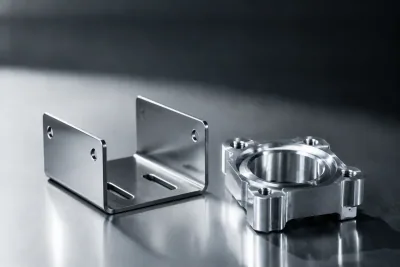 Sheet Metal Fabrication vs CNC Machining: How to Choose the Right ProcessSheet metal fabrication and CNC machining serve different geometries, volumes, and budgets. This data-backed comparison covers cost, tolerance, materials, and lead time.Read More
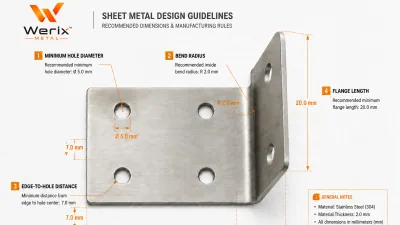 DFM for Sheet Metal: Essential Design Rules That Save Cost and Prevent Production FailuresDesign-for-manufacturing rules for sheet metal — minimum hole sizes, bend radii, edge distances, tab-and-slot design, and common mistakes that cause scrap.Read More
Have a custom part in mind?
Upload your product files or describe your specs — our engineers will return a quote with material, process, and cost details within 24 hours.