
Riveting & Hardware Insertion
Riveting and hardware insertion join sheet metal with permanent mechanical fasteners — press nuts, studs, standoffs, rivet nuts and blind rivets — installed cold with no heat. It joins dissimilar metals and dissimilar thicknesses that welding cannot, adds threaded attachment points, and needs no post-weld finishing.
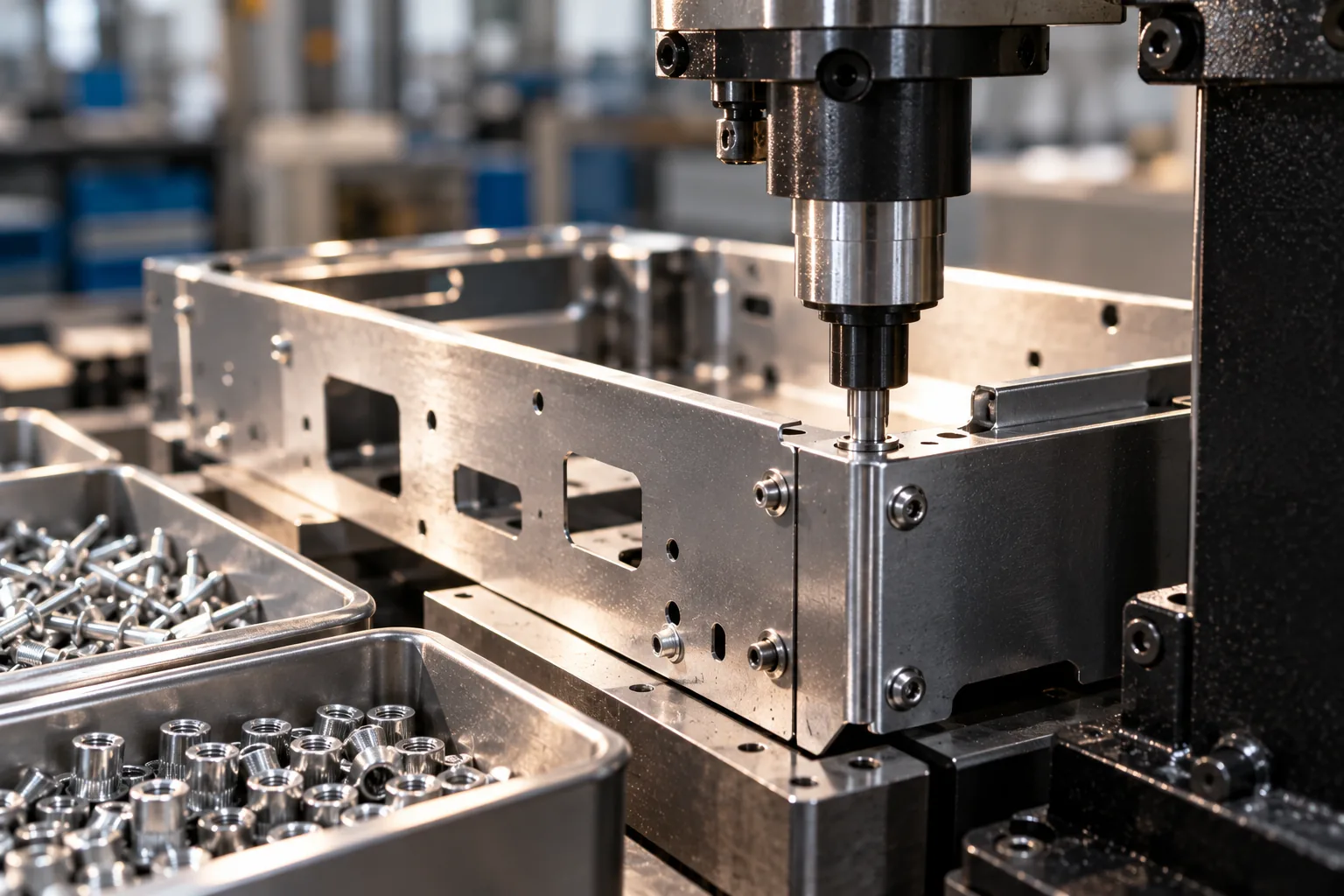
Riveting joins sheet metal with a permanent mechanical fastener — press-fit nuts, studs, standoffs or blind rivets — installed without heat. It joins dissimilar metals and dissimilar thicknesses that welding cannot, needs no post-weld finishing, and is the standard way to add threaded attachment points to a sheet metal assembly.
When is riveting better than welding?
Use riveting when you are joining aluminium to steel, coated to bare metal, or thin to thick, and whenever the assembly should be serviceable. Rivets also avoid the heat-affected zone and distortion that welding introduces, and they do not need grinding, passivation or dressing afterwards.
What hardware can you install?
PEM-style press nuts and studs, self-clinching standoffs, blind rivets, rivet nuts and compression limiters. Hardware is installed on a press or a dedicated insertion machine with the correct hole size and insertion force, then verified with a push-out or torque test on first-off parts.
Riveting and hardware insertion: design rules
| Rule | Guideline | Failure mode if ignored |
|---|---|---|
| Minimum hole-to-edge distance | ≥ 2 × hole diameter | Edge bulge and hardware pull-out |
| Minimum hole spacing | ≥ 2 × hole diameter | Sheet distorts between fasteners |
| Hole-to-bend distance | ≥ 2 × thickness + bend radius | Hole deforms during forming |
| Panel thickness for self-clinching | ≥ 0.8 mm typically | Hardware spins or pushes through |
| Dissimilar metals | Isolate or use compatible hardware | Galvanic corrosion |
Common questions about Riveting & Hardware Insertion
Can hardware be installed after powder coating?
Generally no — insertion damages the coating around the hole and creates a corrosion path. The standard sequence is to install hardware before finishing and mask it during coating. Where masking is not acceptable, we install hardware after coating and accept a visible ring at the joint.
Will rivets loosen under vibration?
Properly installed self-clinching hardware is cold-flowed into the sheet and resists vibration well. Blind rivets need the correct grip range for the stack thickness; a rivet that is too long or too short for the stack will loosen. We specify grip range from your stack-up.
Can you join aluminium to stainless with rivets?
Yes, with isolation between the two metals to prevent galvanic corrosion. We use compatible hardware and, where the assembly is exposed to weather, a barrier such as a nylon washer or an insulating coating. Tell us the service environment when you request a quote.
Materials we run this process on
Related capabilities and next steps
Specifications
Capabilities
Sheet metal engineering guides
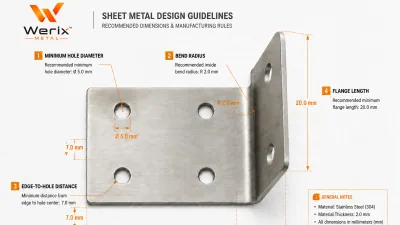 DFM for Sheet Metal: Essential Design Rules That Save Cost and Prevent Production FailuresDesign-for-manufacturing rules for sheet metal — minimum hole sizes, bend radii, edge distances, tab-and-slot design, and common mistakes that cause scrap.Read More
 8 Proven Ways to Cut Sheet Metal Costs Without Sacrificing QualityFrom bend radius optimization to material nesting — eight actionable design and sourcing strategies that reduce cost while maintaining part performance.Read More
Ready to get started?
Upload your design for a quote with DFM analysis — our engineers respond within 24 hours.