
Deep Drawing
Deep drawing pulls a flat blank into a die cavity with a punch to form seamless hollow shapes. Wall thickness is controlled by the draw ratio, and parts deeper than a single reduction allows are produced with redraw stages and intermediate annealing. The result has no weld seam to finish or leak-test.
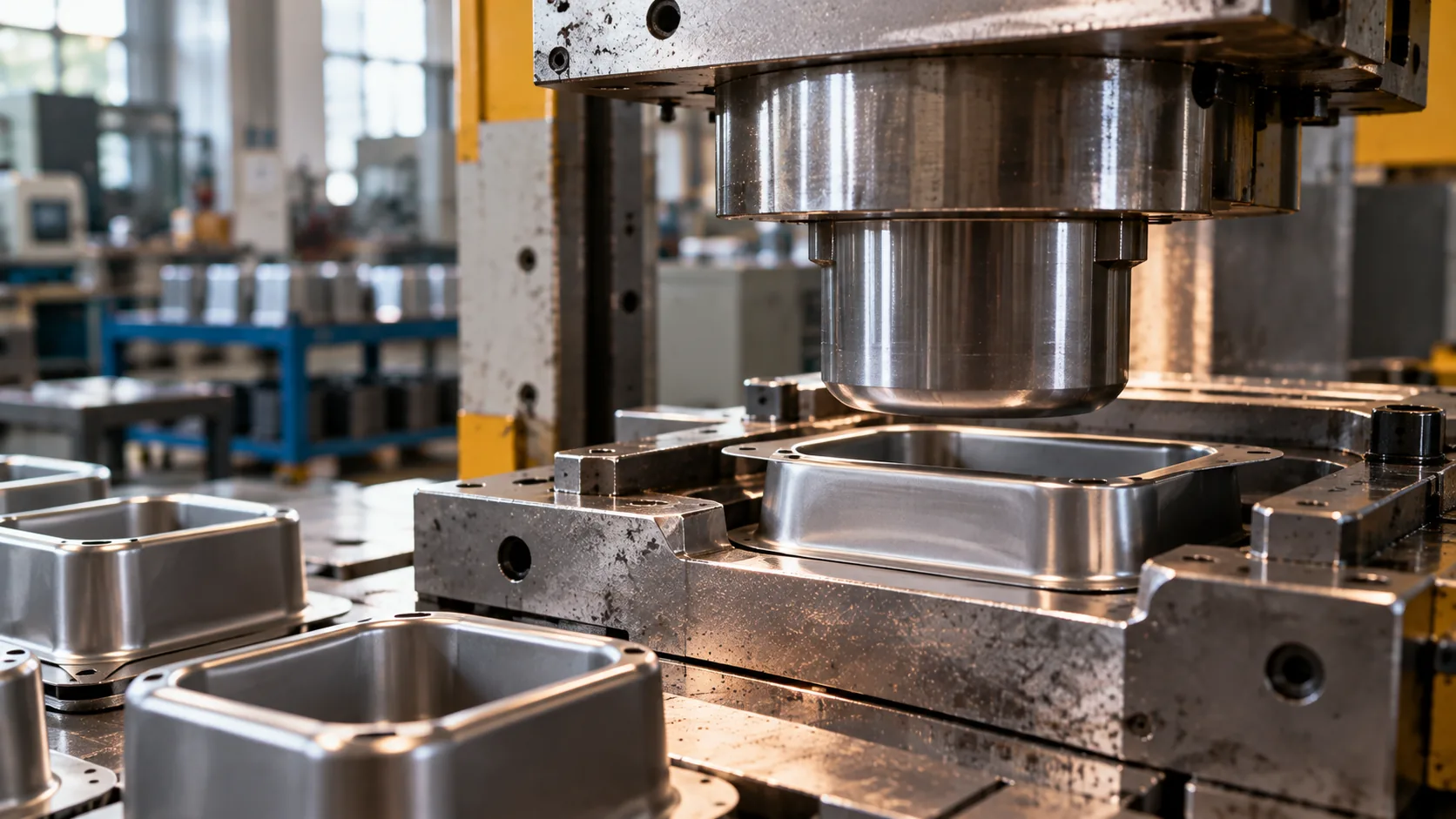
Deep drawing forms flat sheet metal into hollow shapes by pulling a blank into a die cavity with a punch. It produces seamless cups, shells, boxes and housings in a single operation, with wall thickness controlled by the draw ratio. Multi-stage drawing with intermediate annealing handles parts deeper than a single stroke allows.
How deep can a part be drawn in one operation?
The limiting draw ratio for a single reduction is typically around 1.8–2.0 for ductile steel. We plan the first draw comfortably below that limit and add redraw stages with intermediate annealing for anything deeper. Pushing past the limit tears the blank at the punch radius.
What materials draw well?
Low-carbon drawing-quality steels, 304 stainless and 3003/5052 aluminium all draw well because of high elongation. 6061-T6 draws poorly and usually needs an annealed temper. Material choice matters more in deep drawing than in almost any other sheet process, so we review it at DFM stage.
Deep drawing: process planning reference
| Parameter | Guideline | Note |
|---|---|---|
| Single-draw limiting ratio | ~1.8–2.0 (ductile steel) | Deeper parts need redraw stages |
| Intermediate annealing | Between heavy reductions | Restores ductility, prevents tearing |
| Best materials | Drawing-quality steel, 304 SS, 3003/5052 Al | High elongation required |
| Poor candidates | 6061-T6, high-strength alloys | Use an annealed temper instead |
| Typical parts | Cups, shells, housings, boxes | Seamless, no weld joint |
Common questions about Deep Drawing
How do you stop the blank from wrinkling during drawing?
Wrinkling is controlled by the blank holder, which clamps the flange while the punch draws the material in. We set blank holder force from the material, thickness and draw ratio, and adjust it during die trial until the flange feeds smoothly without puckering.
Can deep drawn parts be threaded or have side holes?
Yes. Side holes, threads, flanges and trim features are added after drawing, usually on a secondary die station or a CNC operation. We plan the sequence so the part is trimmed and pierced while it is still supported by the drawn geometry.
Is deep drawing cheaper than welding a box from flat parts?
At volume, usually yes, and the result is stronger. A drawn shell has no seam to weld, finish or leak-test, which removes several operations and a failure mode. Below a few thousand parts the die cost dominates and a fabricated and welded assembly is cheaper.
Materials we run this process on
Related capabilities and next steps
Specifications
Capabilities
Sheet metal engineering guides
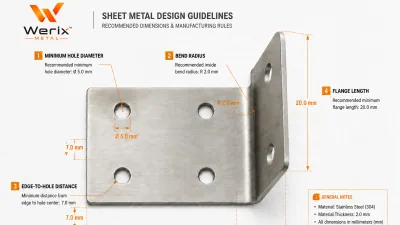 DFM for Sheet Metal: Essential Design Rules That Save Cost and Prevent Production FailuresDesign-for-manufacturing rules for sheet metal — minimum hole sizes, bend radii, edge distances, tab-and-slot design, and common mistakes that cause scrap.Read More
 Sheet Metal Fabrication vs CNC Machining: How to Choose the Right ProcessSheet metal fabrication and CNC machining serve different geometries, volumes, and budgets. This data-backed comparison covers cost, tolerance, materials, and lead time.Read More
Ready to get started?
Upload your design for a quote with DFM analysis — our engineers respond within 24 hours.