
In-House Die Making
We design, machine, assemble and trial stamping tooling on site. Building dies in-house typically shortens tooling lead time by 30–50 percent against an outsourced tool shop, lets design changes be turned around during validation without re-queuing, and keeps maintenance and repair in the same building as production.
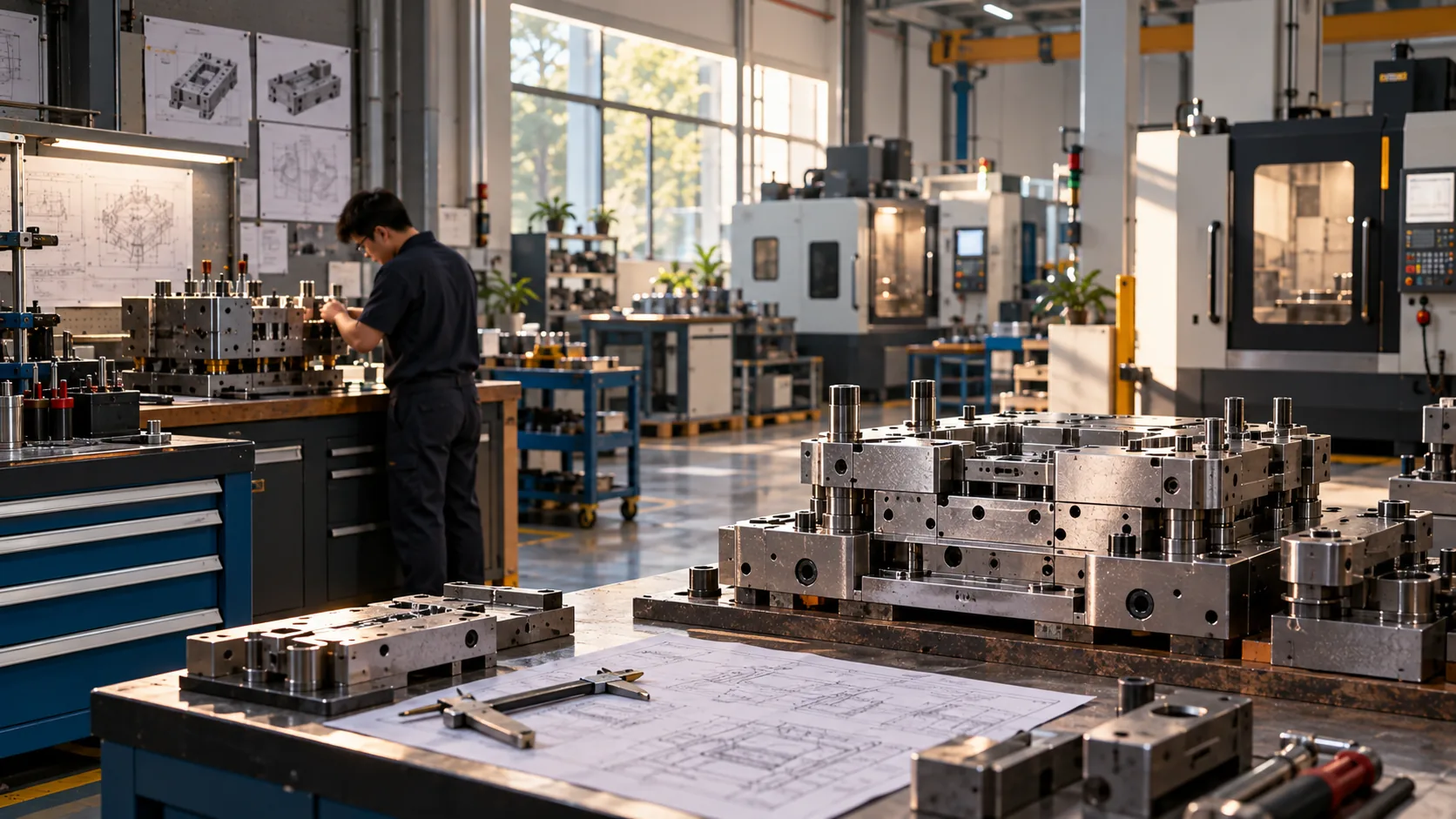
Die making is the in-house design, machining, assembly and trial of the stamping tooling itself. Building dies on site rather than outsourcing them typically shortens tooling lead time by 30–50 percent, allows design changes during validation without renegotiating, and keeps maintenance and repair under the same roof as production.
Why does in-house die making matter to a buyer?
Because the die is the long pole in any stamping programme. An outsourced die shop works to its own queue, so a design change during validation can add weeks. In-house, the same engineers who ran your DFM review walk to the die shop, change the steel, and re-trial the same day.
What happens during a die trial?
The die is mounted, run at reduced speed, and first-off parts are measured in full. Forming issues — wrinkles, splits, springback — are corrected by adjusting draw beads, clearances and radii rather than by compromising the part. Production speed is only released once first-off parts pass inspection.
In-house die shop vs outsourced tooling
| Factor | In-house die shop | Outsourced tooling |
|---|---|---|
| Typical lead time | 3–5 weeks (simple progressive die) | 6–10 weeks |
| Design change during validation | Same-week turnaround | Re-queued at the tool shop |
| Maintenance and repair | On site, same roof as production | Shipped out, production waits |
| Die ownership | Customer owns the die | Varies by supplier contract |
| Process knowledge | Toolmaker and production engineer share data | Information lost between companies |
Common questions about In-House Die Making
Who owns the tooling after the programme ends?
You do. Tooling you paid for is your property. We store and maintain it for the life of the programme and release it to you or to a nominated supplier on request. We never run a customer-funded die for another customer's parts.
Can you repair or modify a die built elsewhere?
Yes. We routinely take over, repair and modify dies built by other tool shops. Send the die or its drawings and we will assess condition, quote the repair or modification, and trial it on our presses before running production.
How long does a die last?
A well-maintained progressive die in mild steel typically runs up to 1,000,000 strokes. Actual life depends on material, lubrication and feature complexity. We schedule inspection and maintenance on stroke count so wear is corrected before it produces out-of-tolerance parts.
Related capabilities and next steps
Specifications
Capabilities
Sheet metal engineering guides
 8 Proven Ways to Cut Sheet Metal Costs Without Sacrificing QualityFrom bend radius optimization to material nesting — eight actionable design and sourcing strategies that reduce cost while maintaining part performance.Read More
 How Sheet Metal Quoting Works: A Complete Cost Breakdown for BuyersUnderstanding how sheet metal quotes are calculated helps you negotiate smarter, compare suppliers fairly, and reduce per-part cost.Read More
Ready to get started?
Upload your design for a quote with DFM analysis — our engineers respond within 24 hours.