
Sheet Metal Embossing
Die-based pressing creates raised or recessed surface patterns on flat sheet metal parts. Embossing adds structural rigidity, branding marks, anti-slip textures, and aesthetic detail without adding material weight or requiring post-process finishing.
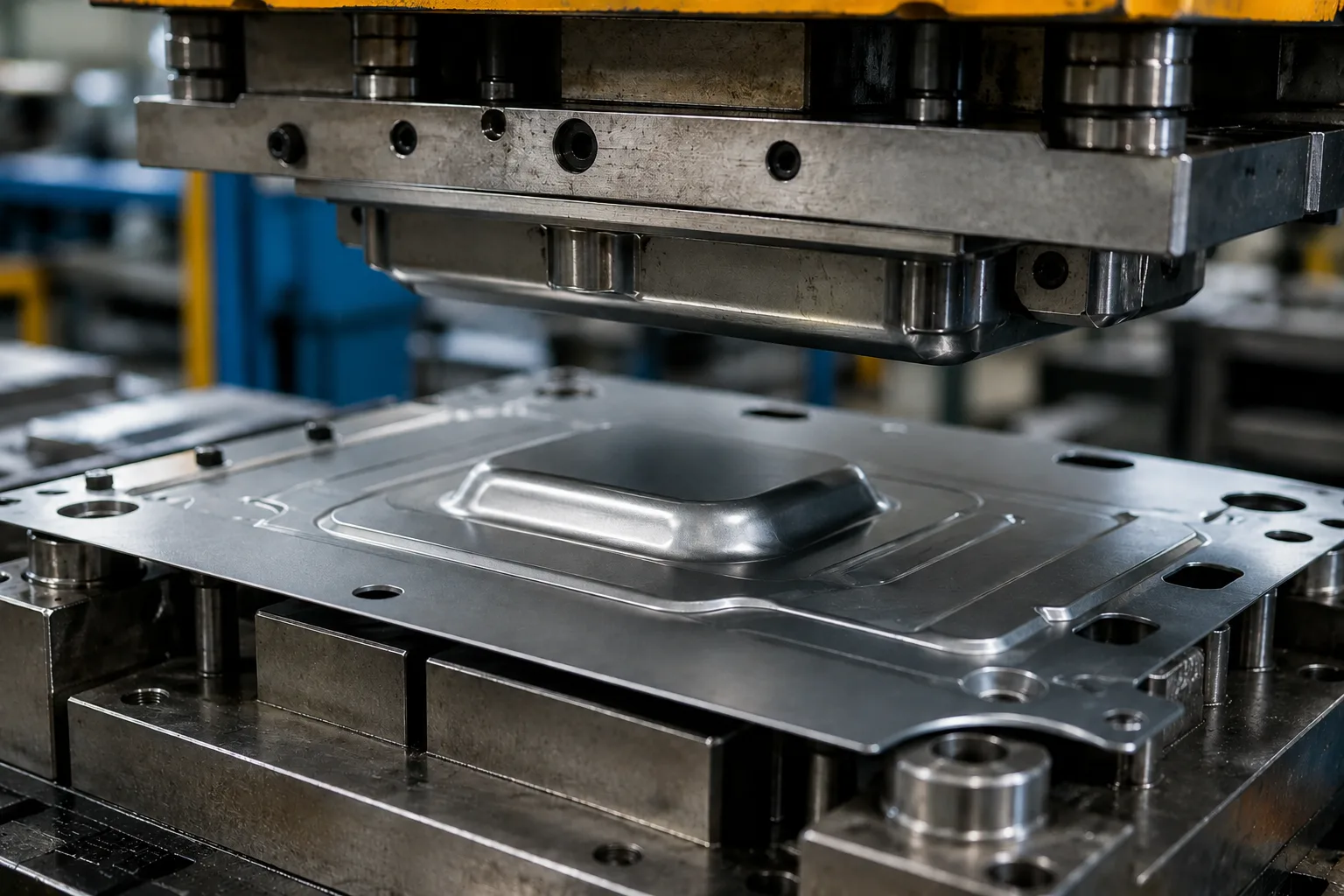
Sheet metal embossing presses a raised or recessed shape into flat sheet using a matched punch and die set. It adds stiffness to thin panels, creates locating features and applies permanent branding without adding parts or weight. The tooling is dedicated to the shape, so embossing suits designs that are frozen and repeat.
What is embossing actually used for?
Three jobs: stiffening large flat panels so they stop oil-canning, creating standoffs and locating pads that remove a separate hardware insertion, and marking logos or part numbers permanently into the metal. On a 1 mm panel, a shallow ring emboss can remove the need for a reinforcing rib entirely.
How deep can an emboss be?
Depth is limited by how far the material can stretch before thinning into failure — generally 1–3 × material thickness for ductile grades, less for high-strength alloys. Deep embosses need generous radii and may require an annealed temper. We evaluate depth against your alloy and gauge during DFM.
Embossing: design limits and typical applications
| Parameter | Guideline | Typical application |
|---|---|---|
| Typical emboss depth | 1–3 × material thickness | Stiffening ribs, locating pads |
| Minimum wall radius | ≥ 1 × material thickness | Prevents tearing at the emboss shoulder |
| Distance from emboss to bend | ≥ 4 × material thickness | Avoids distortion of the formed angle |
| Logo / traceability marks | Any depth within formability | Permanent branding, part numbering |
| Tooling | Dedicated punch and die | Economical at repeat volume |
Common questions about Sheet Metal Embossing
Is embossing cheaper than adding a reinforcing bracket?
At repeat volume, almost always. A bracket means a second part, a second operation, fasteners and labour. An emboss is one stroke in the same setup as the rest of the part. Below a few hundred pieces the dedicated tooling rarely pays back, so we will say so rather than sell you tooling.
Can you emboss a part that is already formed?
Sometimes, but it is better to emboss in the flat and then form. Embossing after bending risks distorting the bend angle and complicates tooling. If your design requires post-form embossing, send the model and we will assess it before quoting.
Will an embossed logo survive powder coating?
Yes, and it reads better than a printed mark because the geometry survives abrasion. Raised logos can be highlighted by lightly sanding the top face after coating. We coordinate the emboss depth with the finish so the coating does not fill shallow detail.
Materials we run this process on
Related capabilities and next steps
Specifications
Capabilities
Sheet metal engineering guides
 DFM for Sheet Metal: Essential Design Rules That Save Cost and Prevent Production FailuresDesign-for-manufacturing rules for sheet metal — minimum hole sizes, bend radii, edge distances, tab-and-slot design, and common mistakes that cause scrap.Read More
 8 Proven Ways to Cut Sheet Metal Costs Without Sacrificing QualityFrom bend radius optimization to material nesting — eight actionable design and sourcing strategies that reduce cost while maintaining part performance.Read More
Ready to get started?
Upload your design for a quote with DFM analysis — our engineers respond within 24 hours.