
Compound Die Stamping
A compound die performs two or more cutting operations in a single press stroke, typically blanking the outline and piercing internal holes at the same time. Because both cuts happen in one hit, concentricity between the profile and the holes is limited only by die precision, and part flatness is preserved.
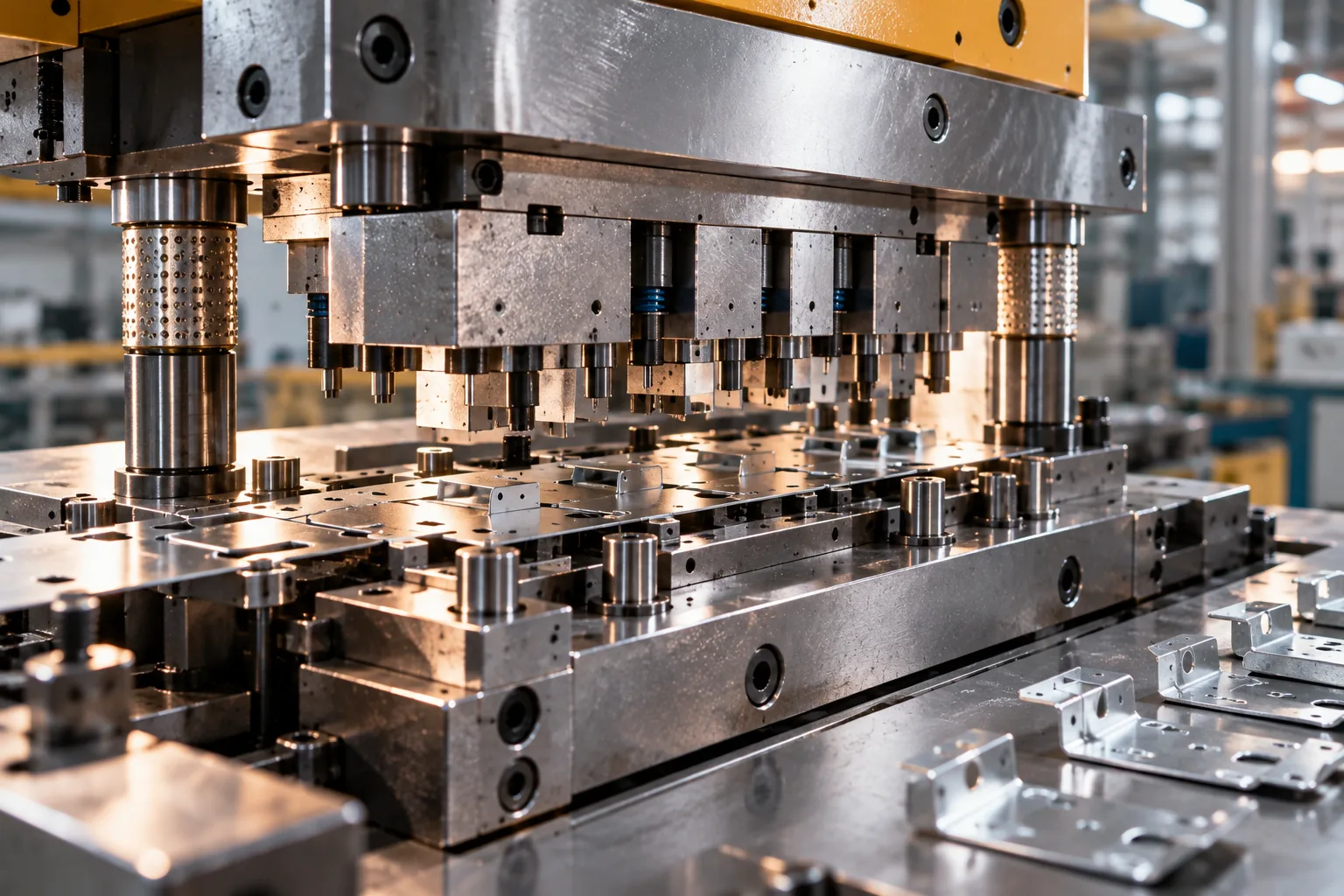
Compound die stamping performs two or more cutting operations in a single press stroke — typically blanking the part outline and piercing internal holes simultaneously. Because both cuts happen in one hit, concentricity between the outside profile and the holes is far better than with sequential operations, and flatness is preserved.
What parts suit a compound die?
Flat parts where the relationship between the outline and internal features is critical: washers, shims, flat brackets, EMI shields, motor laminations and gaskets. If the part needs formed bends, a compound die can blank and pierce it first, but forming happens in a separate operation.
How accurate is a compound die?
Because outline and holes are cut in the same stroke by the same die set, positional accuracy between them is limited only by die manufacturing precision rather than by strip feed error. That is why compound dies are specified when hole-to-edge concentricity matters.
Compound die stamping: where it is used
| Parameter | Compound die capability | Note |
|---|---|---|
| Operations per stroke | Two or more cutting operations | Typically blanking + piercing |
| Concentricity | Excellent | Outline and holes cut in the same hit |
| Part flatness | Preserved | No progressive strip distortion |
| Formed features | Not in the same stroke | Bending is a separate operation |
| Typical parts | Washers, shims, shields, laminations | Flat precision parts |
Common questions about Compound Die Stamping
Can a compound die make bent parts?
Not in the same stroke. A compound die blanks and pierces; forming needs a separate die station or operation. For parts that need both, we blank and pierce on the compound die and then form on a press brake or a dedicated forming die, sequencing the two for the lowest total cost.
Is compound die stamping faster than progressive die stamping?
Per finished part, a compound die is slower because it makes one part per stroke from an already-prepared blank rather than continuously feeding a strip. It is chosen for accuracy on flat parts, not for speed. Where volume is very high and tolerances allow, progressive is faster.
What material thickness can a compound die cut?
Compound dies handle the same range as our other cutting tooling, roughly 0.3 mm to 5 mm depending on alloy and feature size. Very thin material needs tighter die clearance to avoid burrs; we set clearance per material and gauge.
Materials we run this process on
Related capabilities and next steps
Specifications
Capabilities
Sheet metal engineering guides
 Sheet Metal Fabrication vs CNC Machining: How to Choose the Right ProcessSheet metal fabrication and CNC machining serve different geometries, volumes, and budgets. This data-backed comparison covers cost, tolerance, materials, and lead time.Read More
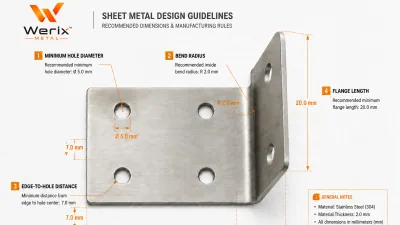 DFM for Sheet Metal: Essential Design Rules That Save Cost and Prevent Production FailuresDesign-for-manufacturing rules for sheet metal — minimum hole sizes, bend radii, edge distances, tab-and-slot design, and common mistakes that cause scrap.Read More
Ready to get started?
Upload your design for a quote with DFM analysis — our engineers respond within 24 hours.